


What does RSVP mean on an invitation?
RSVP is shorthand for the French "répondez, s'il vous plaît". It is a polite request that the guest answer, yes or no, so the hosts can plan. Strictly speaking, writing "please RSVP" repeats the word "please", but it is so common that nobody minds.
The abbreviation matters most at weddings, engagement parties and family celebrations, where the host pays per head or has to book tables, food and seating. A missing reply is not just rude; it leaves the hosts guessing. That is why a good RSVP line does more than say "reply". It names a deadline, a method and, ideally, a way to mention dietary needs or the size of the party.
You may also see "regrets only", which means the guest should reply only if they cannot come. This works for casual gatherings but is risky for weddings, because silence can mean either yes or a forgotten message.
What every good RSVP line should include
Guests reply faster when the request is specific. Before you pick a wording, check that the line answers these questions without making the guest hunt for details:
- A date. "Please reply by 15 May" works far better than "as soon as possible".
- A method. A link, a phone number, a WhatsApp message or a reply card. Offer one main method, not five.
- Who the invitation covers. If the invitation is for named guests only, say so, or ask guests to confirm how many people are coming.
- What you need to know. Attendance, number of guests, dietary requirements, children, accessibility needs.
- A tone that matches the event. A black-tie dinner and a backyard engagement lunch should not sound alike.
When should the RSVP deadline be?
A common rule of thumb is to set the deadline three to four weeks before the event, and at least a week before you must give the venue or caterer a final count. That buffer is what lets you chase late replies without panic. If you are not sure how far ahead to send the invitation itself, see when to send wedding invitations.
Guests who travel or need to book time off will want more notice, so for destination or cross-border weddings a longer window is kinder. For a small engagement party, two weeks can be plenty.
Tip: give the guests a deadline that is a little earlier than the real one. A few people will always reply late, and you want that to land inside your actual planning window.
Formal RSVP wording
Formal invitations keep the language traditional and short. These lines suit black-tie weddings, evening receptions and invitations printed or shared as an elegant digital card.
"The favour of a reply is requested by the first of June."
"Kindly respond by 12 May to confirm your attendance."
"Répondez, s'il vous plaît, by the tenth of April."
"We kindly request the pleasure of your reply by 20 March."
"Please let us know by 30 April whether we may expect you."
"The honour of your reply is requested before the first of September."
"Kindly confirm your attendance by 1 October. We look forward to celebrating with you."
Warm and friendly RSVP wording
Most modern weddings sound like the couple talking to their guests. A warm line still needs a date and a method, but it can carry personality.
"Let us know if you can make it by 15 May. We cannot wait to celebrate with you."
"Will you be there? Please tell us by 1 June so we can save you a seat."
"Your reply by 10 April would make our planning so much easier. Thank you!"
"Please reply by 20 May. We want to be sure there is a chair, a plate and a dance waiting for you."
"Tell us you are coming by 5 June, and we will take care of the rest."
"Join us! Just let us know by 30 April."
"Say yes by 15 September and we will have your favourite song ready."
"Please let us know by 1 May if you and your family can come. Your presence is the best gift."
Short and casual RSVP wording
For engagement parties, henna evenings, brunches and any event where the invitation is a message or a link, brevity wins. These lines fit comfortably under a link or a card.
"RSVP by 12 May."
"Reply by Friday 3 June, please."
"Yes or no by 20 April. That is all we ask."
"Let us know by 1 May. Plus-ones welcome, just tell us how many."
"Tap the link and answer by 15 June."
"Please reply by 8 October, with a thumbs up or a short note."
"Regrets only, by 1 July."
RSVP wording for online invitations and WhatsApp
When the invitation is a link, the RSVP line can point straight at the form. The best online RSVP request tells the guest it takes a minute and what they will be asked. If you are planning to send invitations by message, our guide to wedding invitations on WhatsApp covers the practical side.
"Please reply using the link below by 15 May. It takes less than a minute."
"Tap the button, tell us how many of you are coming and any dietary needs. Deadline: 20 April."
"Confirm your attendance on the invitation page by 1 June. No account or app needed."
"Open the invitation, scroll to the reply form and let us know by 10 May."
"Reply in one tap on the invitation page, and add a note if you like. Please answer by 5 September."
"Your personal link is below. Use it to tell us if you are coming, and with how many guests, by 12 June."
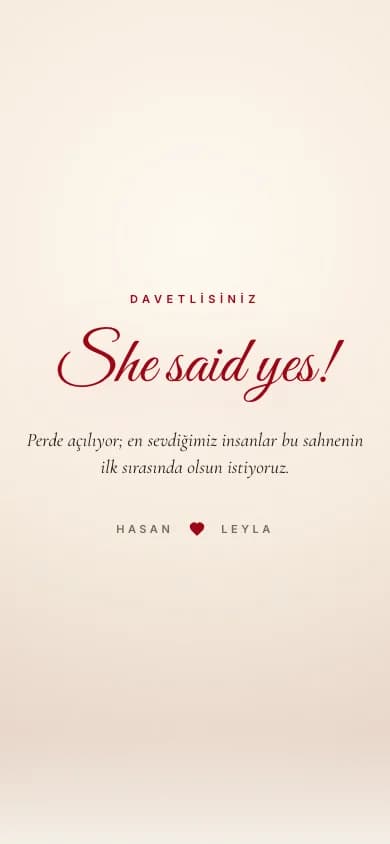
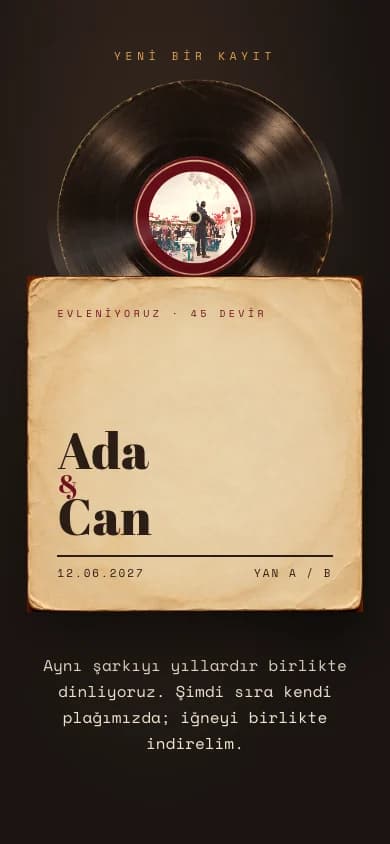
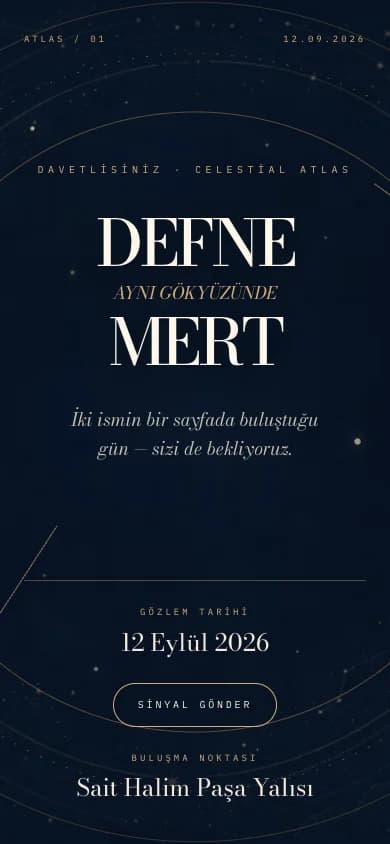
On davetvia the invitation is a link, and the reply form sits at the end of the scroll: guests enter how many people are coming and an optional note, with no app to install.
Wording for special situations
Some invitations need extra clarity. These lines handle the questions guests are most likely to hesitate over.
"Due to limited space, we are unable to accommodate additional guests. Please reply for the people named on your invitation by 1 May."
"Children are warmly welcome. Please include their names and ages in your reply by 15 June."
"This will be an adults-only celebration. We hope you can arrange a little time off and join us. Please reply by 20 April."
"Please tell us about any dietary requirements when you reply by 10 May."
"If you need step-free access or any other assistance, let us know when you reply by 5 June."
"Travelling from afar? Please reply by 1 March so we can help with accommodation."
Online RSVP form versus reply card and phone calls
A reply card needs a stamp, a postbox and a guest who remembers. A phone call or a chat message reaches you, but the answers end up scattered across texts, voicemails and conversations with relatives. An online form collects every answer in one place, with the number of guests and any note next to each name.
What to look for in an online RSVP form: it works on a phone without an app, it is quick to fill in, it asks only what you need, and it lets you see the totals at a glance. A good form also lets you export the list so you can pass it to the venue or caterer.
With davetvia, the RSVP form is part of the invitation. Guests open the link, fill in the form at the end, and the answers appear in your dashboard. On the Standard package you can also download the list as a CSV file and manage replies from a panel. To see how it looks, browse the invitation templates.
How to follow up with guests who have not replied
Send one gentle reminder a few days after the deadline passes, and keep it light. A single message that restates the date and the link is usually enough. Repeated nudges rarely help and can feel pressuring.
If you are using a messaging app, a personal message to the closest family members works better than a broadcast. For everyone else, a short note is fine:
"Hi! We are finalising numbers and have not heard from you yet. Could you tell us by Friday if you are coming? Thank you!"
"Just a small reminder about our celebration. Your reply link is below, and it only takes a moment."
"We would love to have you with us. Please let us know whether you can come, as our planning closes this week."
Common RSVP mistakes to avoid
Most RSVP trouble comes from the same handful of slips. Check your invitation against this list before you send it.
- Giving no deadline, or giving one that is too close to the venue's final-count date.
- Offering several reply methods at once, which splits the answers across channels.
- Forgetting to say whether guests can bring partners or children.
- Using "regrets only" for a wedding with a fixed headcount.
- Asking for too much in the form, such as full postal addresses for a link-only invitation.
- Not checking the link before sending it to the whole guest list.
Templates for this occasion
Open a live preview and personalise it in minutes.
Frequently asked questions
What does RSVP stand for?
RSVP stands for the French phrase "répondez, s'il vous plaît", which means "please reply". It asks the guest to confirm whether they will attend.
Do I have to reply if the invitation says RSVP?
Yes. Reply even if the answer is no, and do it by the date given. The hosts are counting seats, food and sometimes budget based on the answers.
What is the difference between RSVP and regrets only?
RSVP asks every guest to reply, yes or no. Regrets only asks you to reply only if you cannot attend. Regrets only is fine for casual gatherings but risky for weddings with a fixed headcount.
How long before the event should the RSVP deadline be?
A good guideline is three to four weeks before the event, and at least a week before the venue or caterer needs a final headcount.
Can I take RSVPs online instead of by reply card?
Yes. An online form on a digital invitation lets guests reply from a phone and gives you all the answers in one place, with the number of guests and any notes.
Is it rude to ask guests how many people they are bringing?
No. If the invitation does not name a number of seats, asking guests to state how many people are coming is practical and expected.